we build until we are in the future..
Four systems. Four real problems. Here's where they came from.
I was drowning in group texts trying to coordinate my parents' care: doctors, insurance renewals, medications, siblings who needed updates but didn't need another app. So I built OpenCare: a care coordination platform where circles of helpers organize around the people who matter, with tasks, reminders, and daily digests that reach even the family members who barely check email.
Then the mission grew. OpenRecovery applies the same circle model to substance use and dual diagnosis recovery — 10 modalities, daily check-ins, journaling, and Recover E, an AI voice companion that's sharp, challenging, and built for people who want to do the work, not sit back and wait. It's not clinical. It's not cookie-cutter.
The whole thing lives under the Poor People App — a platform for underserved communities where the AI handles the 95% of bureaucratic work that's purely procedural, and human Sentinels handle the 5% that requires real judgment. Identity on Nostr. Care that's free. Infrastructure for the people who can't afford to wait for the system to work.
53M unpaid US family caregivers · ~$30/mo server cost · Running on one EC2 instance.
opencare.poorpeople.app · poorpeople.appHard-E is a full AI sales director that lives inside a contractor's CRM. It doesn't just answer questions — it pulls up customer records, moves jobs through pipeline stages, sends texts and emails, schedules appointments, looks up pricing, and remembers everything from every conversation. Twenty-one CRM tools, real-time voice powered by Cartesia at 40ms latency, and a persistent memory system that gets sharper the more you use it.
The voice pipeline is the real differentiator. Deepgram transcribes, Claude Sonnet 4 reasons and selects tools, Cartesia speaks — all over WebRTC with barge-in support. It's not a chatbot with a microphone taped to it. It's a production voice agent that can look up a customer mid-sentence, check their job status, and tell you what stage it's in without breaking conversational flow.
Multi-tenant, invite-based trials, encrypted credentials per company, tenant-isolated knowledge bases. Built to clone — swap the CRM plugin, rewrite the personality file, upload new training docs, and it becomes a sales director for a different industry.
harde.appMost contractor websites are brochures with a contact form bolted on. This one had to be different — the founder spent 30 years watching the industry get it wrong. Hard sells, vague estimates, leads that go nowhere. All Angles launched as a startup built on the opposite: educate first, earn trust, then ask permission.
So I built the entire conversion around that. No contact form. Instead, a guided interactive journey that walks homeowners through the process at their own pace. By the time they reach the end, they've learned something, they've uploaded photos of their home, and they've decided on their own terms that they're ready. That's when the system asks for one thing: permission to come measure.
Behind the curtain, uploaded photos hit S3 and GPT-4o Vision reads the exterior — siding material, trim condition, visible damage. Perplexity researches the property. The contractor receives an AI-briefed dossier on a lead who already said yes, before he's picked up the phone.
Next.js 14 · Supabase · GPT-4o Vision · Perplexity · AWS (SES, S3, DynamoDB) · James Hardie Elite Preferred
aaexterior.comI built a staff member that never sleeps. Ethos is a Hermes Agent running on AWS Lightsail, reachable by voice or text through Telegram. It coordinates real care tasks via the OpenCare API, runs a 9-lens video intelligence pipeline that extracts clips and synthesizes research into structured wiki pages, and maintains a multi-domain knowledge base across investing, technology, and frontier science — over 100 pages of interconnected analysis that grows every week. It delegates expensive work to cheaper models, resets its own sessions, and curates its own skill library without being asked. The whole operation costs less than a coffee a day.
$2–4/day · 100+ wiki pages · Claude Sonnet 4.6 + Haiku 4.5 · Voice-enabled
Internal system
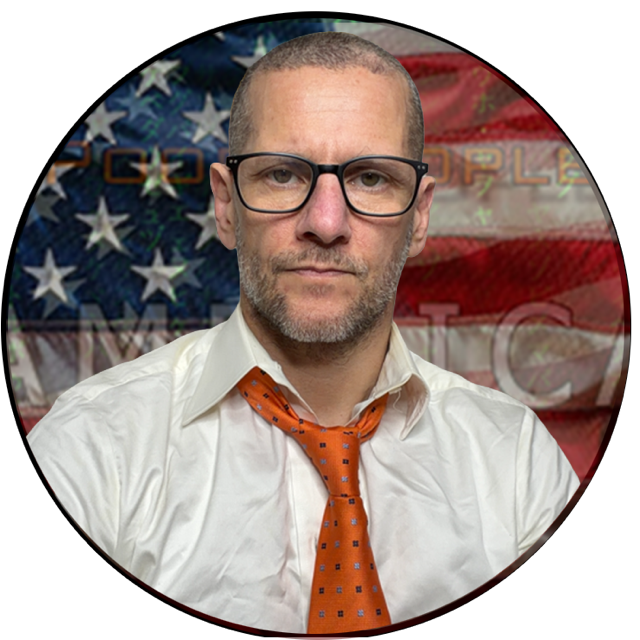
I came into this sideways — restaurant, art school, Unity game dev, then Python, then the agents hit and everything accelerated. I don't have a computer science degree. What I have is ten years of feeding families and knowing what actually matters to people, a compulsion to build things that serve someone other than the demo, and enough stubbornness to see them through to production.
The agents handle what agents handle well. I handle what still requires a human: the judgment calls, the vision, the question of whether a thing should exist at all.
If the work is interesting and the people are serious.